Bookkeeping For Churches: Major Benefits of Outsourcing Bookkeeping Services
Bookkeeping Services For Ecommerce: Our Firm Provides Virtual Financial Record-Keeping For Businesses
Features and Advantages: Opening Your Business's Monetary Possible
Ever seem like you're drowning in a sea of receipts and spreadsheets? The modern service landscape, teeming with development and rapid change, requires a different approach to financial management. This isn't almost keeping the books; it has to do with tactical insights, performance, and ultimately, peace of mind. Online bookkeeping services aren't simply a trend; they're a basic shift, using a suite of features designed to empower your business.
Key Features of Online Bookkeeping
Consider it like upgrading from a horse-drawn carriage to a high-performance cars. What abilities does this upgrade bring?
- Automated Deal Categorization: No more manual sorting! Your bank and charge card transactions are instantly drawn in and appointed to the right categories. It's like having a meticulous librarian for your financial resources.
- Real-time Financial Reporting: Envision understanding your precise financial standing at any given minute. Online platforms supply up-to-date reports, from earnings and loss declarations to balance sheets. This isn't yesterday's news; it's now.
- Expense Tracking and Management: Gone are the days of shoeboxes loaded with crumpled invoices. Digital expense capture, often through mobile apps, guarantees every penny invested is represented, simplifying tax preparation and spending plan adherence.
- Invoice Management and Bill Pay: Simplify your accounts receivable and payable. Produce professional invoices, send automated tips, and even schedule expense payments. Money flow management ends up being a breeze.
- Bank Reconciliation: A critical action for precision, online services automate this procedure, catching discrepancies quickly. It's the financial equivalent of a double-check system, ensuring whatever lines up completely.
- Secure Data Storage: Your financial information is a gold mine. Online services use robust encryption and security protocols, protecting your sensitive information from unapproved access.
The Tangible Benefits: Why It Matters to You
Beyond the bells and whistles, what real-world advantages do these features equate into for your service? The benefits are profound, affecting whatever from operational performance to tactical decision-making.
- Time Savings: This is perhaps the most immediate and impactful benefit. Just how much time do you currently spend battling with financial records? Online bookkeeping liberates hours, allowing you to focus on core service activities, growth, and development.
- Boosted Accuracy: Automation significantly reduces the margin for human error. Less mistakes mean more trustworthy monetary information, which is important for sound decision-making.
- Enhanced Capital Management: With real-time insights into earnings and expenses, you can prepare for monetary ups and downs, making informed choices about investments, payroll, and operational costs.
- Cost Effectiveness: While there's an investment, the long-lasting cost savings from decreased errors, structured procedures, and possibly lower accounting costs often outweigh the initial expense. It's about wise spending, not just cutting corners.
- Scalability: As your company grows, your accounting requires develop. Online platforms are naturally scalable, adjusting to increased transaction volumes and more complex monetary structures without requiring a total overhaul.
- Better Decision-Making: Armed with precise, updated monetary reports, you acquire a clearer photo of your service's health. This empowers you to identify patterns, determine locations for improvement, and make tactical choices with self-confidence. It resembles having a GPS for your company journey.
The shift to online accounting isn't just a functional upgrade; it's a strategic move towards a more effective, informative, and eventually, more profitable future for your service. Are you prepared to accept the clearness and control it provides?
Key Factors To Consider for Choice
Picking the best online accounting service isn't almost choosing the first name that turns up in a search; it's an elaborate dance of examining requirements versus offerings. Have you truly considered the large volume of transactions your company creates monthly? A small consulting firm with a handful of invoices differs significantly from an e-commerce giant processing numerous daily sales. Lots of small company owners, in their passion to unload financial jobs, frequently underestimate the sheer scale of their own operations, leading to mismatched service tiers and unforeseen friction down the line. It resembles attempting to fit a square peg in a round hole-- annoying for everybody included.
Scalability and Future Growth
The service you select today ought to easily accommodate your goals for tomorrow. Will your chosen online bookkeeping service flawlessly scale as your service expands? Envision the upheaval of switching service providers mid-year since your present plan can't deal with a sudden rise in income or the addition of brand-new line of product. This oversight, though relatively minor at the start, can speed up considerable operational disturbance and data migration headaches. Search for companies that provide tiered service levels or personalized bundles, permitting elegant shifts as your needs develop. A genuinely skilled suggestion: inquire about their procedure for onboarding brand-new staff members or incorporating additional payment gateways. These relatively little details typically expose the true versatility of their system.
Combination Capabilities
Does the potential service play well with your existing tech stack? This isn't simply a convenience; it's a vital functional artery. Photo this: your e-commerce platform, CRM, and payroll system all humming along, however your brand-new bookkeeping service stands aloof, requiring manual information entry. This produces a traffic jam that can negate any time cost savings you wished to accomplish. Look for services boasting robust integrations with popular company tools. Do they link directly with copyright Online, Xero, or perhaps industry-specific software you might use? An absence of seamless combination typically results in redundant data entry, a breeding ground for errors, and a substantial drain on valuable time. It's the digital equivalent of handwriting every deal, only to re-type it into another system. Think about the following combination points:
- Payment Processors (Stripe, copyright, Square)
- Payroll Services (Gusto, ADP)
- CRM Systems (Salesforce, HubSpot)
- E-commerce Platforms (Shopify, WooCommerce)
Data Security and Confidentiality
In an age where data breaches make headlines with alarming regularity, the security posture of your chosen bookkeeping solutions supplier can not be overstated. Are your financial secrets really safe? Dive beyond generic assurances. Inquire about their file encryption protocols, data backup treatments, and catastrophe healing plans. Do they employ multi-factor authentication? Are their servers frequently examined for vulnerabilities? A less obvious however important aspect is their worker vetting procedure; who has access to your delicate monetary information? Remember, a chain is only as strong as its weakest link. A trusted virtual bookkeeping firm will be transparent about their security measures, not just offer vague promises. It's your financial heart beat we're talking about; don't delegate it to simply anyone.
Smooth Software Symphony: Integrating Your Financial Environment
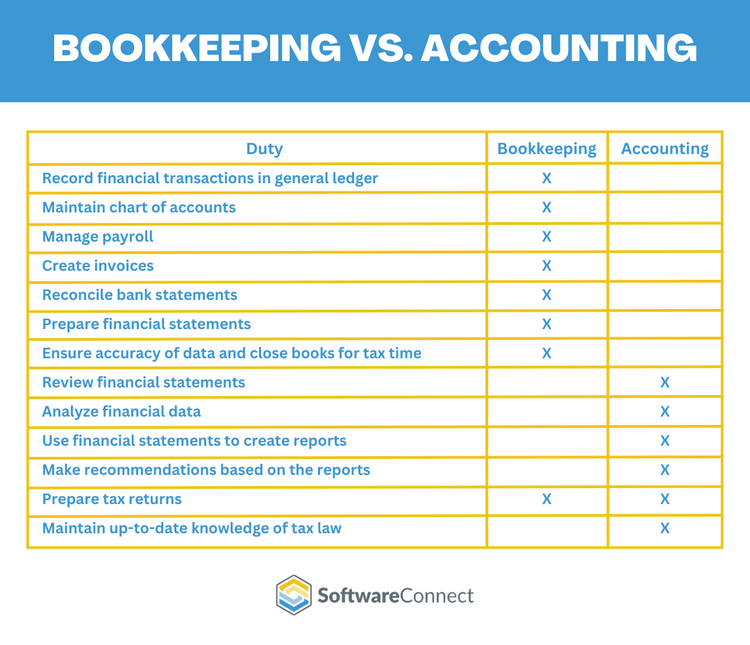
Ever felt like your monetary information is spread throughout a lots different islands, each requiring a different boat ride? It's a common dilemma, particularly for companies welcoming the digital age. The real magic of online bookkeeping services truly shines when they don't simply exist in isolation however instead end up being the main nerve system for your entire operational software suite. Think about it: your CRM holds consumer information, your stock system tracks stock, and your payroll software handles employee payment. Without proper combination, you're left manually inputting data from one system to another, a tiresome and error-prone dance that saps precious time. This isn't merely inconvenient; it produces a fertile ground for disparities, causing a distorted view of your financial health. Keep in mind the old adage, "Trash in, garbage out"? It holds particularly real when financial figures are included. A single lost decimal can ripple through an entire quarter's reporting.
Navigating the Integration Labyrinth
So, how do you ensure your financial management software application plays perfectly with the rest of your digital toolkit? It's less about discovering a legendary "one-size-fits-all" option and more about strategic selection and thoughtful application. Many top-tier online bookkeeping platforms boast a robust API (Application Programs User Interface), which is essentially a digital handshake permitting various software to interact and exchange information instantly. When examining potential services, constantly ask about their existing combinations. Do they get in touch with the accounting software application you already use? What about your e-commerce platform or expense management tools? The depth and breadth of these pre-built connections can save you tremendous development time and resources. In some cases, a custom integration might be needed, however this need to be a last resort, as it often features greater costs and more complicated maintenance.
- Prioritize platforms with a strong performance history of third-party combinations.
- Try to find open APIs that enable for future custom connections if required.
- Consider the bi-directional flow of information-- does info move both methods flawlessly?
Opening Effectiveness and Insights
The true power of integrated accounting services lies in the removal of redundant information entry and the production of a merged information source. Imagine a world where a sale taped in your CRM immediately updates your inventory and activates an invoice in your bookkeeping system. This isn't futuristic fantasy; it's the present reality for companies that strategically integrate their software. This smooth circulation of information not just increases operational performance but also provides an unrivaled holistic view of your company performance. You can create real-time reports that cross-reference sales data with stock levels, or payroll costs with task success. This integrated information makes it possible for more educated decision-making, permitting you to identify patterns, determine areas of inadequacy, and take chances with greater accuracy. It's like having a crystal ball, but instead of unclear prophecies, it provides actionable insights derived from your own interconnected data. Don't underestimate the extensive impact this can have on your strategic preparation and bottom line.
Security and Data Privacy: A Digital Fortress for Your Finances
.jpeg?width=869&height=581&name=AdobeStock_124308052%20(1).jpeg)
Ever felt that slight tremor of stress and anxiety when thinking about the digital world for your most delicate financial data? It's a legitimate concern, one that echoes the tale of Pandora's Box, but with a modern-day twist. Online bookkeeping services promise unrivaled convenience, yet the specter of an information breach looms large for many. Is it a handle the digital devil, or a prudent action into the future? The truth, as always, lies in the details-- particularly, the robust security protocols put in location by trusted service providers. Consider it less as a leap of faith and more as entrusting your belongings to a high-security vault, albeit one accessible from your sofa.
The primary concern for organizations, especially little and medium-sized enterprises, often focuses on the vulnerability of their monetary records. Think of the turmoil if exclusive details, client lists, or even staff member payroll details fell under the wrong hands. This isn't merely an inconvenience; it's a potential catastrophe that might paralyze operations and deteriorate trust. Lots of organization owners, accustomed to physical ledgers and locked filing cabinets, grapple with the abstract nature of digital safeguards. They ask, "How can I make sure my numbers aren't simply floating out there for anybody to snatch?" The response lies in understanding the layers of protection used. Data file encryption, for instance, isn't just a technical term; it's the digital equivalent of scrambling your info into an unreadable code, making it indecipherable to unauthorized eyes. Even if obstructed, without the decryption secret, it's just gibberish.
Strengthening Your Digital Journal
Beyond encryption, what other bulwarks should you anticipate from a top-tier online accounting solution? Multi-factor authentication (MFA) is non-negotiable. It's the digital bouncer who requires not just your password, but a 2nd type of verification-- maybe a code sent out to your phone or a biometric scan. This substantially reduces the danger of unauthorized access, even if a password is jeopardized. Consider the circumstance where a staff member accidentally clicks a phishing link; with MFA, the breach is most likely avoided before any real damage takes place. Furthermore, try to find suppliers who go through routine, independent security audits. These aren't simply internal checks; they're external professionals trying to break in, identifying and fortifying any weak points. Consider it as an expert ethical hacker providing the system an extensive tension test. What about the physical place of the information? Credible services house their servers in highly secure, geographically distributed data centers, typically with redundant power supplies and advanced fire suppression systems. This safeguards versus localized disasters, guaranteeing your data stays available and undamaged, come what may. The resilience of these systems often exceeds what any specific business might reasonably execute on its own.
When assessing suppliers, here delve deeper than surface-level assurances. Ask about their information backup and recovery protocols. How often is information supported? Where are these backups kept? In the unlikely event of a system failure, how rapidly can your data be brought back? A robust catastrophe recovery plan is the digital equivalent of an escape route, ensuring continuity even in unpredicted situations. Look for services that offer granular access controls, permitting you to dictate exactly who can see or customize specific monetary details. This internal control is simply as vital as external security, avoiding unexpected errors or malicious actions from within your own group. Keep in mind, true digital peace of mind comes from an extensive approach to security, not just a couple of separated features. It has to do with building a digital fortress, brick by encrypted brick.